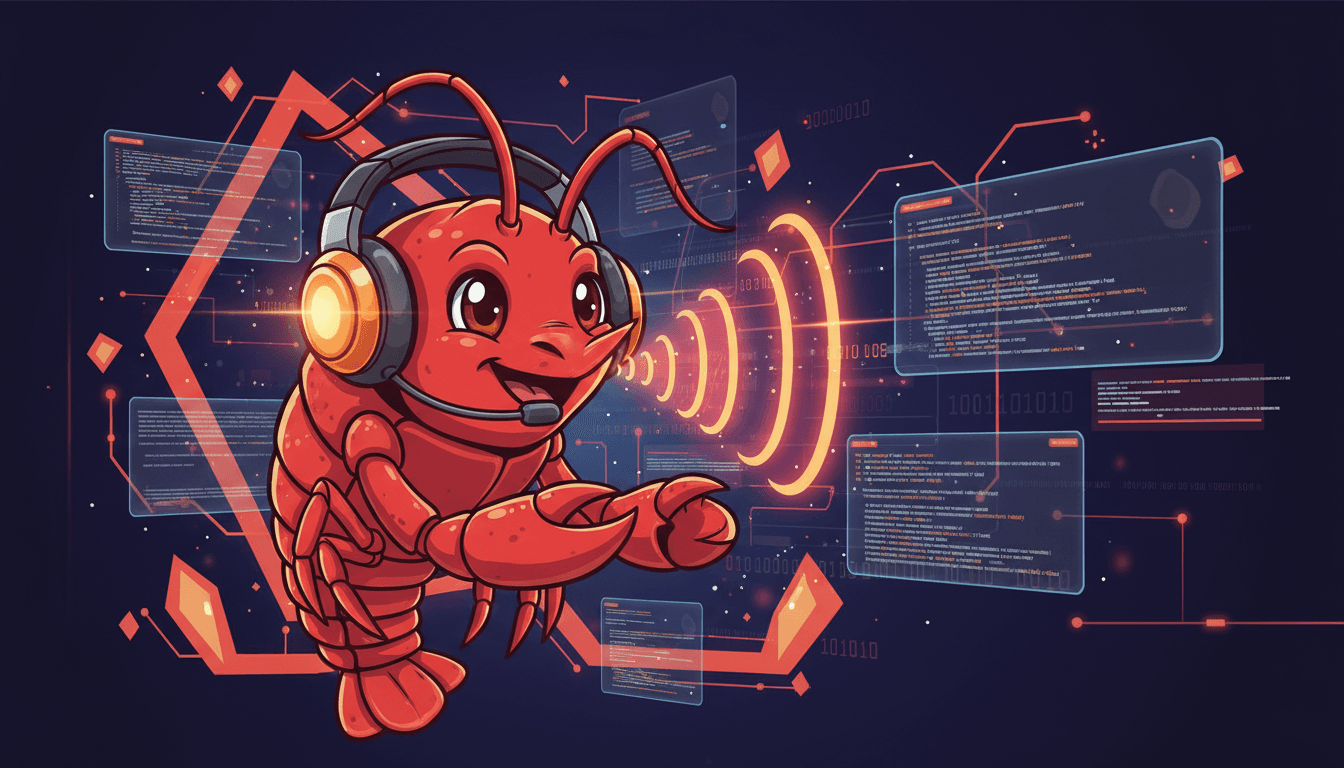
OpenClaw Voice Commands: The Complete Guide
Meta Description: Master OpenClaw voice commands with this comprehensive guide. Learn essential commands, advanced tips, troubleshooting, and how voice control transforms your AI agent workflow.
Primary Keyword: openclaw voice commands Secondary Keywords: openclaw voice control, openclaw voice assistant, openclaw hands-free, openclaw audio commands Target Word Count: 1,800-2,000 words Content Type: How-to Guide Target Audience: OpenClaw users seeking hands-free operation Search Intent: Informational Tone: Technical but accessible
Introduction
Voice control is rapidly becoming the preferred interface for AI agents, and OpenClaw leads the pack with a robust set of voice commands that let you control your digital workspace without touching a keyboard. Whether you're multitasking, prefer auditory feedback, or simply want a more natural way to interact with your AI assistant, mastering openclaw voice commands can dramatically boost your productivity.
This guide covers everything you need to know about openclaw voice control—from basic navigation commands to advanced power-user techniques. By the end, you'll be navigating, executing tasks, and customizing your OpenClaw experience entirely by voice.
Who this article is for: OpenClaw users who want to leverage voice commands for hands-free operation, productivity enthusiasts, accessibility-focused users, and anyone looking to optimize their AI workflow.
Getting Started with OpenClaw Voice
Before diving into specific commands, let's ensure your OpenClaw setup is ready for voice control.
Prerequisites
- OpenClaw installed and configured (see our OpenClaw Getting Started Guide)
- Microphone access enabled
- Voice recognition language set to your preference
Activating Voice Mode
To enter voice command mode, simply say:
"Hey OpenClaw" or press Ctrl+Shift+V (Windows/Linux) / Cmd+Shift+V (macOS)
OpenClaw will respond with an audio chime and display "Listening..." in the terminal. You're now in voice control mode.
Voice Settings Configuration
Customize your voice experience by editing ~/.openclaw/voice.yaml:
voice:
  activation_phrase: "Hey OpenClaw"
  language: "en-US"
  sensitivity: 0.85
  feedback: "audio"  # options: audio, visual, both
  wake_word_detection: true
Essential OpenClaw Voice Commands
These are the core commands every OpenClaw user should know.
Navigation Commands
Navigate your workspace and manage files without touching the keyboard:
| Command | Action |
|---|---|
"Navigate to [directory]" | Change to specified directory |
"List files" | Display directory contents |
"Show current directory" | Print working directory |
"Go back" | Move to parent directory |
"Find [filename]" | Search for files matching pattern |
Example: "Navigate to ~/projects" moves your session to the projects folder.
Task Execution Commands
Execute tasks and run processes via voice:
| Command | Action |
|---|---|
"Run [command]" | Execute specified shell command |
"Start [service]" | Initiate background service |
"Stop [process]" | Terminate running process |
"Check status of [item]" | Query service/process status |
"Install [package]" | Install via configured package manager |
Example: "Run git status" executes git status in your current directory.
Control Commands
Manage your OpenClaw session directly:
| Command | Action |
|---|---|
"Pause" | Suspend current operation |
"Resume" | Continue paused operation |
"Cancel" | Abort current command |
"Undo" | Revert last action |
"Redo" | Re-execute reverted action |
"Clear" | Clear terminal screen |
File Management Commands
Create, modify, and organize files hands-free:
| Command | Action |
|---|---|
"Create file [name]" | Generate new empty file |
"Delete [file]" | Remove specified file |
"Copy [source] to [dest]" | Duplicate file |
"Move [source] to [dest]" | Relocate file |
"Edit [file]" | Open in configured editor |
Advanced Voice Tips
Once you've mastered the basics, these advanced techniques will supercharge your workflow.
Chaining Commands
Combine multiple commands in a single voice input for complex operations:
"Navigate to ~/projects, run npm install, then open package.json"
OpenClaw processes chained commands sequentially, reporting results after each step.
Voice Shortcuts
Create custom voice shortcuts for frequently-used command sequences in ~/.openclaw/shortcuts.yaml:
shortcuts:
  deploy: "git add . && git commit -m 'Update' && git push"
  backup: "cd ~/ && tar -czf backup.tar.gz documents/"
  health_check: "curl -s localhost:3000/health || echo 'Service down'"
Now simply say: "Run deploy shortcut" or "Execute health check shortcut".
Voice Confirmation Settings
For destructive operations, configure confirmation behavior:
voice:
  confirm_destructive: true  # Voice prompt before delete/modify
  confirmation_phrase: "Are you sure?"
Continuous Voice Mode
Enable continuous listening for extended hands-free sessions:
"Enable continuous mode"
OpenClaw stays in voice listening mode until you say "Exit continuous mode".
Voice Feedback Customization
Choose how OpenClaw confirms commands:
voice:
  feedback:
    success: "chime"      # audio chime on success
    error: "buzz"         # distinct sound on error
    confirmation: "verbal" # spoken confirmation
Troubleshooting Common Voice Issues
Even the best systems have hiccups. Here are solutions to frequent voice command problems.
OpenClaw Doesn't Hear You
Symptoms: Activation phrase fails to trigger response.
Solutions:
- Check microphone permissions: System Settings → Privacy → Microphone
- Verify microphone is set as default input device
- Increase sensitivity in
voice.yaml(try 0.9) - Reduce background noise or use a directional microphone
- Test with:
"Hey OpenClaw, are you listening?"
Misrecognized Commands
Symptoms: OpenClaw executes wrong command or says "I didn't understand."
Solutions:
- Speak clearly and at consistent pace (not too fast)
- Use the [target keyword] in full: say "openclaw" naturally in commands
- Adjust language setting if accented speech is common
- Report misrecognition to improve future models
Voice Mode Gets Stuck
Symptoms: Terminal shows "Listening..." but doesn't respond.
Solutions:
- Press
Escto exit stuck state - Kill stuck process:
Ctrl+C - Restart voice service:
openclaw voice restart - Check logs:
tail -f ~/.openclaw/logs/voice.log
Background Noise Triggers Commands
Symptoms: Random commands execute without your voice.
Solutions:
- Increase wake word threshold in settings
- Use push-to-talk mode instead of always-listening
- Add noise gate threshold to filter ambient sound
Voice vs Text Commands: A Comparison
Should you use voice or text with OpenClaw? Here's when each shines:
| Scenario | Best Interface | Reason |
|---|---|---|
| Multitasking / hands-busy | Voice | Control while doing other tasks |
| Long complex commands | Text | Precision without repetition |
| Quick status checks | Voice | "Hey OpenClaw, what's my disk space?" |
| File editing | Text | Cursor precision matters |
| Initial setup | Text | Undo/redo flexibility |
| Presentations | Voice | Audience sees output, not typing |
| Noisy environments | Text | Voice fails with background noise |
| Accessibility | Voice | Switch control alternative |
Pro tip: Toggle between modes with "Enable voice mode" and "Disable voice mode" as needed.
Voice Command Reference Card
Quick reference for your desk:
ACTIVATION
  "Hey OpenClaw"          → Enter voice mode
  Ctrl+Shift+V             → Toggle voice mode

NAVIGATION
  "Navigate to [path]"     → Change directory
  "List files"             → Show directory
  "Go back"                → Parent directory

EXECUTION
  "Run [command]"          → Execute shell command
  "Check status of [x]"     → Query service/process

CONTROL
  "Pause" / "Resume"       → Suspend/continue
  "Cancel"                 → Abort operation
  "Clear"                  → Clear screen

FILES
  "Create file [name]"     → New file
  "Delete [file]"          → Remove file
  "Edit [file]"            → Open in editor
Frequently Asked Questions
How do I enable OpenClaw voice commands?
Enable voice by saying "Hey OpenClaw" or pressing Ctrl+Shift+V (Cmd+Shift+V on Mac). Ensure microphone permissions are granted in your system settings and that your voice.yaml config file exists with wake_word_detection: true.
Can I use custom wake words for OpenClaw?
Yes. Modify the activation_phrase in ~/.openclaw/voice.yaml. Some users prefer shorter phrases like "Claw" or longer personalized wake words to avoid accidental triggering.
What microphones work best with OpenClaw voice commands?
Any standard USB or Bluetooth microphone works. For noisy environments, consider a noise-canceling microphone or a headset with built-in noise reduction. The key factor is signal-to-noise ratio.
How do I disable voice commands temporarily?
Say "Disable voice mode" or press Ctrl+Shift+V again. You can also set OpenClaw to text-only mode via openclaw config set voice.enabled false.
Why does OpenClaw sometimes not respond to my voice commands?
Common causes include: microphone not set as default input device, background noise interfering, voice sensitivity set too low, or the voice service needing a restart. Try openclaw voice restart first.
Can I chain multiple voice commands together?
Yes. OpenClaw supports command chaining in voice mode. Say something like "Navigate to projects, run git status, then list files" and each command executes sequentially.
Conclusion
OpenClaw voice commands transform your AI agent from a text-based tool into a true hands-free assistant. Start with the essential navigation and execution commands, then gradually incorporate advanced techniques like chaining and custom shortcuts. The combination of voice control and OpenClaw's powerful scripting capabilities creates a workflow that adapts to how you work—not the other way around.
Key takeaways:
- Voice commands activate via "Hey OpenClaw" or keyboard shortcut
- Essential commands cover navigation, execution, control, and file management
- Advanced features include command chaining, shortcuts, and continuous mode
- Most issues resolve by checking microphone permissions or restarting the voice service
- Use voice for quick tasks and multitasking; text for precision work
Ready to go hands-free? Start with one voice command today and build from there.
Next steps:
- Set up your
voice.yamlconfiguration - Try the essential commands listed above
- Create your first voice shortcut for a frequently-used command
- Explore the OpenClaw Getting Started Guide for more tips
Published: 2026-04-11 Author: LobsterDome Editorial Category: Guides Tags: OpenClaw, Voice Control, AI Agents, Productivity, Hands-Free



Comments
Loading comments…